
Ethiopia and China Sign Protocol to Enable Permanent Cassava Exports
- November 28, 2025
- Posted by: Samson
- Categories: Articles, Business News
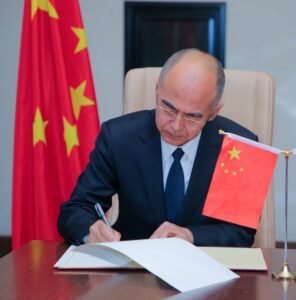
Addis Ababa, November 28, 2025
Ethiopia has gained formal market access to one of the world’s largest cassava importers following the signing of a new cooperation agreement with the People’s Republic of China. The Ministry of Agriculture (MoA) announced that a Memorandum of Understanding has been concluded with China’s General Administration of Customs (GACC), allowing for the permanent export of Ethiopian cassava and cassava-based products to the Chinese market.

The agreement establishes the phytosanitary, inspection, and certification framework required by Chinese authorities and represents a significant step in Ethiopia’s broader strategy to diversify agricultural exports and strengthen agro-industrial value chains.
⸻
Context and Market Significance
Cassava is increasingly sought after in global markets, particularly Asia. China imports millions of tonnes annually for use in food manufacturing, animal feed, ethanol production, sweeteners, and the fast-growing biodegradable packaging sector. Ethiopia possesses substantial untapped cassava potential—particularly in SNNP, Sidama, Gambella, and parts of Oromia—but lacked formal export protocols until now.
By securing access to China, Ethiopia adds a new export commodity, reduces dependence on traditional crops such as coffee and oilseeds, and positions itself for industrial processing opportunities such as starch and ethanol production.
⸻
Key Elements of the Agreement
The MoU provides the technical and regulatory foundation for Ethiopian cassava to enter the Chinese market:
• Phytosanitary requirements and plant-health certification aligned with GACC standards.
• Inspection and quality-assurance procedures for fresh roots, dried chips, flour, and processed derivatives.
• Registration and traceability systems for farms, processors, and exporters.
• Bilateral cooperation mechanisms for laboratory testing, pest-risk management, and export monitoring.
Implementation will include farm mapping, approved processing facilities, and systematic compliance audits.
⸻
Implications for Ethiopia’s Agricultural Sector
The new protocol is expected to:
• Attract investment into cassava production, aggregation, and industrial processing.
• Improve smallholder incomes by linking them to long-term export markets.
• Support Ethiopia’s foreign-exchange earnings by entering a high-volume, high-value global commodity chain.
• Encourage local agro-processing plants to supply industrial-grade cassava starch and flour for export.
⸻
OmoAddis Agriplatform Positioned as an Early Industry Driver
Against this backdrop, OmoAddis Agriplatform PLC emerges as a key private-sector player. According to information available on its website and public sources, OmoAddis is a specialized cassava commercialization and export platform designed to connect Ethiopian producers with global buyers—particularly China.
The company works across the cassava value chain by:
• Coordinating smallholder and commercial cassava production.
• Aggregating and supplying export-grade cassava flour and chips.
• Supporting farmers and processors to meet export standards.
• Partnering with Chinese companies seeking Ethiopian cassava.
• Collaborating with domestic institutions, such as Ethio Engineering Group, to expand production capacity.
With the new Ethiopia–China protocol now in place, platforms like OmoAddis are expected to play an increasingly important role in organizing supply, ensuring compliance, and driving commercial export volumes.