
Meskel Flower, Duki Building
Bole, Addis Ababa, Ethiopia.
-
Ethiopia’s Electric Vehicle Market Accelerates After Fossil-Fuel Import Ban
- February 20, 2026
- Posted by: Samson
- Categories: Economy, Featured Articles
No Comments
Ethiopia’s 2024 ban on fossil-fuel vehicle imports has triggered a sharp rise in electric vehicle adoption. Backed by hydropower and competitive Chinese EV pricing, the country is reshaping its transport market.
-
Ethiopia Unveils Major Liberalization of Foreign Exchange Rules
- February 11, 2026
- Posted by: Samson
- Categories: Economy, Featured Articles

The National Bank of Ethiopia’s new directive relaxes long-standing FX restrictions, allowing exporters full retention of earnings, expanding access for businesses and individuals, and simplifying cross-border payments. These measures are expected to boost liquidity, strengthen market confidence, and create a more predictable environment for trade, investment, and digital commerce.
-
Ethiopia–Brazil Economic Cooperation Forum 2026: A New Chapter for South–South Partnership
- February 6, 2026
- Posted by: Samson
- Categories: Business News, Featured Articles

The 2026 Ethiopia–Brazil Economic Cooperation Forum convened more than 130 Brazilian companies and delegates in Addis Ababa—one of the largest Brazilian business missions to the Horn of Africa to date. Hosted at the Skylight Hotel, the forum underscored the growing strategic alignment between the two countries in agriculture, logistics, energy, and industrial development.
-
Opinion | The Afreximbank–Fitch Rift Signals a Larger Problem in How Africa Is Rated — Ethiopia Included
- January 31, 2026
- Posted by: Samson
- Categories: Articles, Featured Articles
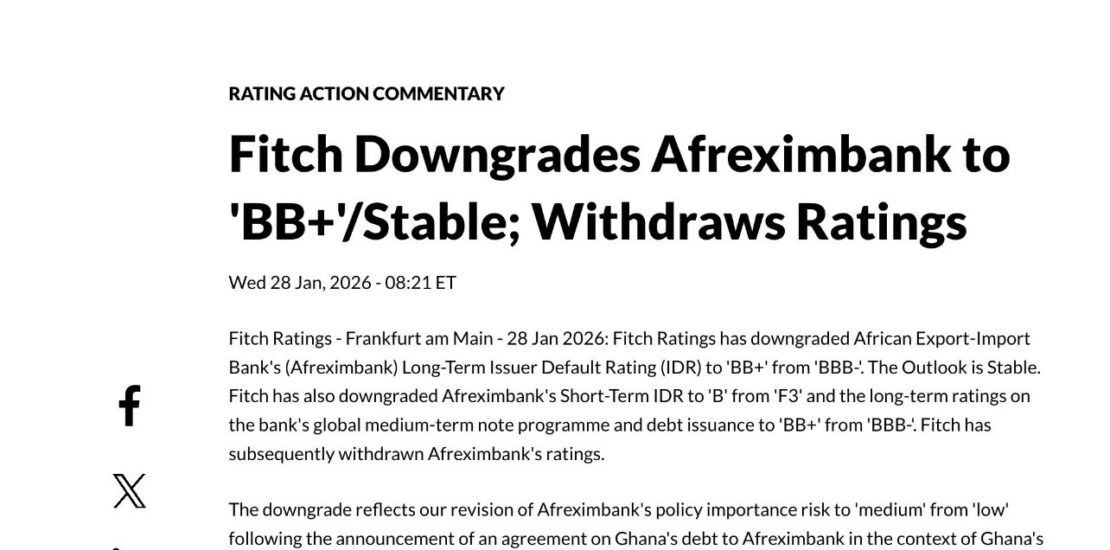
Afreximbank’s recent break with Fitch Ratings highlights a broader problem in how African institutions are judged by global credit-rating models. The methodologies often understate regional strengths and overlook ongoing reforms—a pattern Ethiopia has also faced in its own sovereign ratings. The episode reinforces a simple point: Africa must improve fundamentals, but it must also ensure that the global system evaluating those fundamentals reflects African realities.
-
Ethiopia’s Investment Incentives Regulation No. /2018: A Shift Toward Performance-Based and Capital-Driven Investment Policy
- January 21, 2026
- Posted by: Samson
- Categories:
-
Ethiopia and Japan Call for Deeper Trade and Investment Partnership
- January 13, 2026
- Posted by: Samson
- Categories: Articles, Featured Articles

The Ethio–Japan Business Forum will be held on January 13, 2026, at Skylight Hotel, Addis Ababa. The forum serves as a high-level platform to strengthen economic cooperation between Ethiopia and Japan, bringing together policymakers, investors, business leaders, and development partners.
-
Trade Delegation to Visit Ethiopia for Multi-Sector Cooperation Talks
- January 13, 2026
- Posted by: Samson
- Categories: Business News, Featured Articles

A high-level Turkish trade delegation is scheduled to arrive in Addis Ababa this week to explore expanded commercial cooperation with Ethiopia
-
Ethiopia and China Sign Protocol to Enable Permanent Cassava Exports
- November 28, 2025
- Posted by: Samson
- Categories: Articles, Business News

Ethiopia and China have signed a new agreement allowing permanent export of Ethiopian cassava to the Chinese market. The deal sets the required phytosanitary and quality standards and opens a major opportunity for farmers, processors, and platforms like OmoAddis to supply one of the world’s largest cassava importers.
-
Foreign Investor Secures Ethiopia’s First Gas Retail License Under New Directive
- November 20, 2025
- Posted by: Samson
- Categories:

Ethiopia issues its first gas retail license to a foreign–Ethiopian joint venture under Directive No. 1082/2025, opening the fuel retail market to foreign investors. Ethio Natural Gas Marketing and Distribution PLC will distribute locally produced LNG, marking a major step in Ethiopia’s trade liberalization and energy sector reform.
-
Safeguarding Ethiopia’s Capital Market: A Detailed Examination of ECMA’s AML/CFT Guideline
- November 4, 2025
- Posted by: Samson
- Category: Featured Articles

The Ethiopian Capital Market Authority’s November 2025 guidance underscores that the securities industry can be exploited both to launder illicit funds and to generate illicit profits through activities such as market manipulation and insider trading. Despite this risk, suspicious transaction reports (STRs) from the sector have historically been relatively low. To address this gap, the guideline mandates a documented risk‑based approach: market intermediaries must identify money‑laundering risks by customer type, product and transaction, review these assessments regularly and focus attention on higher‑risk relationships.
-
Alternative Minimum / Turnover-Based Minimum Tax in Africa: How Ethiopia’s AMT Compares.
- November 3, 2025
- Posted by: Samson
- Categories: Featured Articles, Finance & accounting
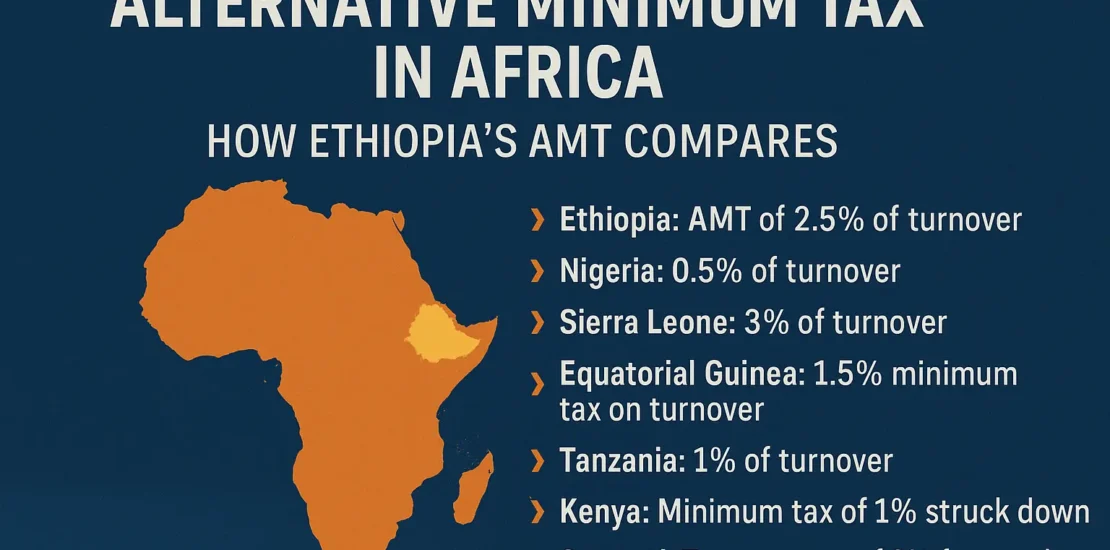
Ethiopia’s Alternative Minimum Tax (AMT), effective July 8 2025, marks a structural shift in African corporate taxation. Set at 2.5 percent of turnover, it ensures that companies contribute a baseline tax even when incentives or losses reduce their profit-based liability. This makes Ethiopia’s AMT one of the highest minimum-tax floors in Africa, exceeded only by Sierra Leone’s 3 percent rate.
-
Ethiopia’s Digital Payments Surge Beyond 17 Trillion Birr in FY 2017
- November 3, 2025
- Posted by: Samson
- Categories: Business News, Featured Articles

Ethiopia’s digital payment ecosystem recorded an unprecedented expansion in the 2017 fiscal year, exceeding 17.7 trillion birr in total transactions. Mobile banking accounted for over 76% of the total, reflecting a rapid shift from traditional ATMs and POS to mobile-based platforms such as TeleBirr and digital wallets. The trend highlights Ethiopia’s accelerating transition toward a cash-light economy, driven by improved connectivity, financial inclusion, and fintech innovation.
-
Ethiopian Electric Power Introduces New Electricity Tariff Structure for Data Mining Operations
- October 30, 2025
- Posted by: Samson
- Categories: Business News, Economy, Featured Articles

Ethiopian Electric Power (EEP) has formally announced a revised electricity tariff framework for data mining customers, marking a strategic adjustment designed to align the energy sector with Ethiopia’s national cost recovery objectives and the evolving energy demands of the digital economy.
-
Ethiopian Railways Corporation Unveils Ambitious Investment Strategy to Attract Private and Foreign Partners
- October 25, 2025
- Posted by: Samson
- Categories: Business News, Featured Articles

The Ethiopian Railways Corporation (ERC) is finalizing a transformative investment strategy aimed at attracting private and foreign investors through PPPs and joint ventures. The plan features major projects, including the redevelopment of ERC’s Lagar site into a mixed-use urban complex, new logistics hubs in Indode, Mojo, and Dire Dawa, and continued expansion of key railway lines — signaling Ethiopia’s shift toward a modern, partnership-driven transport economy.
-
NBE Cracks Down on Businesses Using Personal or Third-Party Bank Accounts
- October 25, 2025
- Posted by: Samson
- Categories: Business News, Featured Articles

The National Bank of Ethiopia (NBE) has warned businesses and individual traders against using personal or third-party bank accounts for official transactions, citing risks of tax evasion and illicit financial activity.
-
How to Export Goods Under the AfCFTA Preferential Trade Agreement
- October 23, 2025
- Posted by: Samson
- Categories: Articles, Economy, Featured Articles

Learn how Ethiopian exporters can trade under the AfCFTA preferential tariff system. Step-by-step guide covering rules of origin, tariff verification, customs procedure codes, and certificate of origin requirements.
-
Draft Investment Incentive Regulation Proposes Major Shift from Tax Exemptions to Deduction-Based Incentives
- October 19, 2025
- Posted by: Samson
- Categories: Featured Articles, Investmnet

Ethiopia’s Ministry of Finance has proposed a new Investment Incentive Regulation that replaces long-standing income tax exemptions with targeted deductions. The reform introduces 5–15% tax reductions based on investment type and location, signaling a shift toward a transparent, results-based incentive system that prioritizes high-impact and sustainable sectors.
- 1
- 2